
Is AI coming for art?
I’m not a tech-y person, not really. I can keep up with somewhat technical discussions, and I am reasonably competent to troubleshoot my own PC. But I’m not a coder, a developer, or an engineer. I don’t have a whole lot to add to the AI discussion from a technical perspective. Much of my understanding of the technical edge of AI comes from listening to this conversation. Multiple times.
What I am is one of the people who theoretically stand to lose out bigtime by the advent of AI.
Introduction
I am, of course, a writer in my spare time. I’m a genre-fiction novelist aspiring to publication, with a couple of short story placements to my name. My unrelated day job is one that could see many elements potentially automated by emerging AI technologies. On paper, I should be panicking, right? Should I be demanding immediate action to protect my creative work from being churned into the AI training process? Should I be taking steps to ensure that my art is not devalued by the coming avalanche of AI-generated stories?
On the other side of the argument are the more sanguine voices. There are people who are optimistic about the fate of human art sharing the market with AI creations. Some thinkers and opinion-sharers on the topic seem not to cover the art question at all. They focus on questions surrounding what AI could mean for philosophy, religion, and human meaning itself. As a SF/Fantasy writer, it’s hard not to swan-dive down these rabbit holes. Runaway or malevolent scientific advancement, all too often explicitly in the form of AI, is too big of a staple of SF for my mind not to drift back to those stories.
I don’t intend this to be an exposition of my final opinion on this subject. The point of this post is to explore what I read and hear from others, and untangle my own reactions. I’m open to having my understanding of the issues improved and my mind changed.
AI or AGI? What are we dealing with?
The first thread that I felt that I needed to disentangle was the one tied to what exactly has arrived. More technically-wise sources point out that there is a gulf of difference between AI and AGI. Artificial Intelligence being, essentially, a trainable search engine, highly capable of routinized tasks. Artificial General Intelligence, on the other hand, could potentially emulate human-esque cognitive capabilities in a way that is very much still science fiction… for now.
As far as art and storytelling go, the fact that we are still dealing with AI, not AGI, is a good thing. It means that the machine isn’t telling a story – it’s behaving like a clever search engine. The computer is fed parameters by a human, and gives a response based on its prior human-guided training. The technology absolutely has implications for the way that humans develop ideas and distill and present information, but remains a far cry from an independent nonhuman intelligence and a “rise of the machines.” It does not, at least yet or in my layman’s understanding, have ideas of its own outside of its human-led training and prompting.
I resonate with the take below – while we may be on our way to an artificial conscious intelligence, for now, we just aren’t there.
Argued Risks to Creatives
Even recognizing that the technological advances being marketed as AI are not yet into HAL9000-level capability, there are still concerns about its usage that are worth investigating.
“Cheap AI-Produced Art Deprives Human Artists of their Livelihood”
A primary and obvious concern for people who, already or aspirationally, make their living with creative production, is the dramatic reduction in the cost of creative products through the partial or entire outsourcing of production to AI. If anyone can feed a story prompt to the AI and have a full novel returned within seconds, what happens to the value of a novel written “the hard way?”
There will be some painful adjustments for writers, in the short run. But in the long run I foresee a premium paid for human creativity over AI-generated story, art, and content. In the same way that one can still purchase handmade bespoke leather shoes in a world filled with cheap mass-produced plastic shoes, the market for the work of a skilled human craftsman will never be zero. AI content will diverge from human creative work as two separate products, each with their own markets.
Some people will use AI-generated art. It will probably have a financial impact on human creators, especially those with lesser skill levels. Those harsh words come with full recognition of the mathematical and cultural certainty that one of those impacted creators will be me.
Responding to the Challenge
I see this objection as a call to action. I am honing my craft toward a goal. The aim is that my human touch might one day be so skilled that it cannot be replaced by a computer prompt. This is a call toward excellence in storytelling and worldbuilding and character development for me. If I’m not working toward creating something at least as good as what a computer can mash together out of a library of what’s come before, why am I even writing?
Making a living as a writer or artist has always been a profoundly long shot. The advent of AI technology hasn’t added that obstacle. The Pareto principle is a cruel fact of reality.
I don’t believe that AI is coming so much for artists as it is coming for content creators. Like so many other areas, computers and programs shine best at tasks that are high-compliance and high-repetition, formulaic by nature. I anticipate that AI will eventually dominate the generation of filler writing, listicles, and so on. Writing that is often branded as “clickbait” is most at-risk. For these pieces, the quality and value ends at its ability to draw attention, not necessarily with deeper meaning or importance. To the extent that content is needed, perhaps it is a good thing to reduce its development to an AI prompt. It might free up valuable time for creators to devote to the kinds of endeavors that do require a human imagination.
History Marches On
The history of the written word is riddled with developments that creators resisted. Examples range from the printing press to the typewriter to the dime novel to the Internet. Each of these advancements paved the way for every creator fearing for the fate of their livelihood today to do what they do at all. I hope that AI may ultimately open more doors than it closes, as so many technological revolutions have.
There are a lot of questions surrounding how these newest advances will be negotiated. I don’t pretend to have thought through them all. I’m still wrestling with the idea of an actor’s performance captured and replicated digitally for a new production. The idea of cunning deepfakes, and how those might be used nefariously, whether by the machines or by our fellow humans, is more troubling to me. I don’t want to come off as entirely optimistic. These risks seem real, and it is already difficult to trust what comes through any screen at face value.
“The AI Training Process Plagiarizes Human Art.”
Another concern is that art and story that have already been developed by humans will become uncompensated training fodder for AI machines. The argument is that this is little better than, or as bad as, plagiarism.
I’m empathetic to this concern, no doubt. But the way that I understand AI machines to “train” on information is very like the way that human artists naturally gather lifetime exposures and experiences that influence their creative work. Does every human author not owe their ideas and sources to the kind of books and stories that they have encountered in the past? Tolkien “trained” on a lifetime of studying Norse mythology, Finnish language, Christian doctrine, among much else. More overtly, “50 Shades of Grey” is infamous for its early incarnation as “Twilight” fanfiction. In a nontrivial way, E.L. James “trained” on “Twilight.” It remains to be seen whether a machine is capable of the extra twist of creativity necessary to move from remixing known, to taking a new step into the unknown.
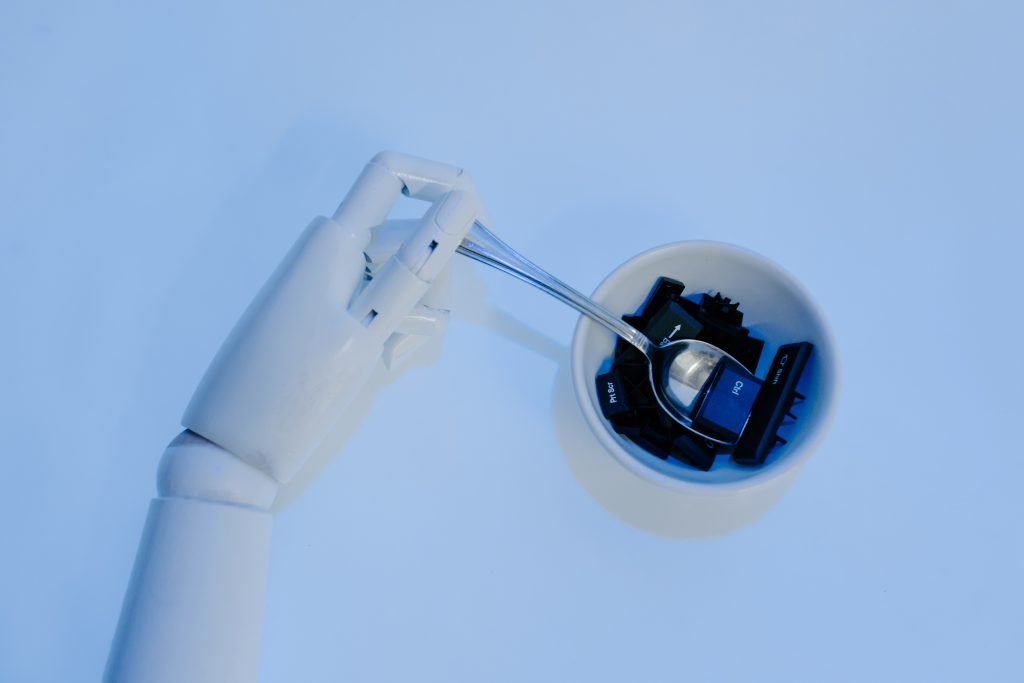
To argue that AI art is plagiarism also argues that every piece of human art is plagiarized from the environment in which the artist lived. Human ideas do not come from nowhere. We are inspired and influenced by our lifetime experience of others’ work. For now, cunningly queried AI story strikes me more as something akin to fanfiction.
I am not here advocating plagiarism or forgery in the least. If AI harvests verbatim, it is dishonest in the same way that it is dishonest for a human. If AI technology reaches the kinds of thresholds that would mark it as an AGI, mankind itself may depend on it holding values such as honesty and integrity. Mind-bending stuff to think about. I found Dr. John Vervaeke’s video essay on AI fascinating and thought-provoking in this context.
“We won’t be able to tell AI from Reality!”
I envision a market-driven solution to the issue, and expect them to arise naturally among artists and lovers of art and story. Something along the lines of a Better Business Bureau. Let’s create an institution that encourages authors and artists to join voluntarily. This could provide a means for readers and buyers to find art with a certified human touch.
The ability to identify nefarious AI-generated content is of far greater concern outside of the sphere of artistic endeavor. How might society be manipulated if AI, or AGI, can generate a story, image, or video, that isn’t readily discernable from reality? What happens when “fake news” becomes a whole lot more literal? Not just propagandistic twisting of reality, but its wholesale manufacture? Considering what that could mean for civilization, whether a fictional story is the result of a prompt or of human creativity seems irrelevant. But those concerns are for a different essay.
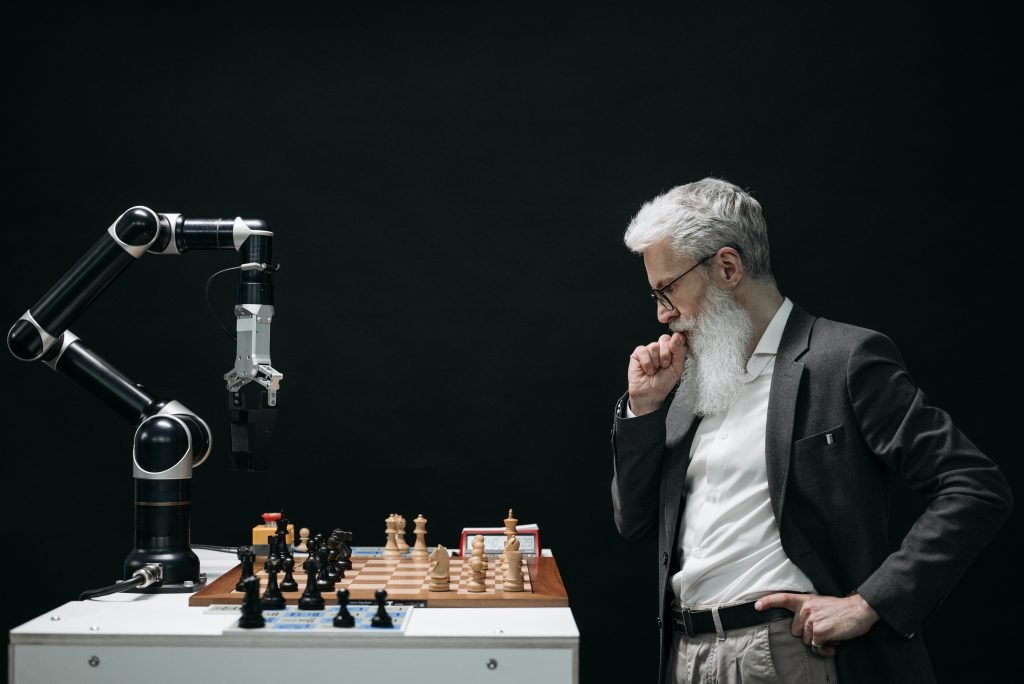
So… is this writer (GASP!) pro-AI? Are the AI machines coming for artists?
Not exactly. But I doubt that the arguments I’ve set out here will endear themselves to most creatives with opinions on the topic.
I have major concerns about AI technology and its applications to areas closer to the base of Maslow’s hierarchy than art and creativity. This is especially true under the assumption that AI technology is developing toward AGI.
I do believe that there will be painful changes as creative industries negotiate how to use this technology, nor not, just as there have been throughout history. If I had a wish, it would be for market solutions to those changes, rather than legal and regulatory ones. I believe that can happen.
I don’t see myself diving into AI, personally. Finding inspiration and developing a story and crafting it into something pretty darn cool is what draws me. It wouldn’t be nearly as much fun to punch a prompt into a machine and have a story come out. In short, I love the process.
I truly hope that I’m right. I hope that AI ultimately makes creating great work and sharing that work with the world, more accessible to more people.
If you enjoyed, were provoked, or otherwise had your attention captured by this post, you may also enjoy this post. Writing as art or business may seem futile with AI on the horizon. But there is still plenty of reason to sit down and write. Especially fantasy.
Until next time, may your coffee be strong and may the Muse be with you!
Be First to Comment